










Will AI in Security Ever Replace Humans?
Artificial Intelligence is quickly changing the Everyday world and the and security world is no exception. From smart surveillance systems to real time threat alerts, AI promises speed, accuracy and efficiency. But does that mean humans are no longer needed? Not quite.
I’m Chris Connor, and I’ve spent the last 22 years working in the security industry. In that time, I’ve seen technology constantly evolve to tackle new and emerging threats. More recently, the rise of AI has sparked a lot of questions, and a considerable amount of concern. Will AI take my job? Will it replace me altogether?
We are certainly not at Terminator and Skynet levels of machines taking over the world, but there is no denying AI has a role to play in modern security. The key thing to understand is that AI is not here to replace people. It is here to assist them, taking on repetitive everyday tasks and allowing security professionals to focus on what really matters.
So, let’s talk about how AI and humans can work together to make security smarter, faster and more effective.
AI in Security
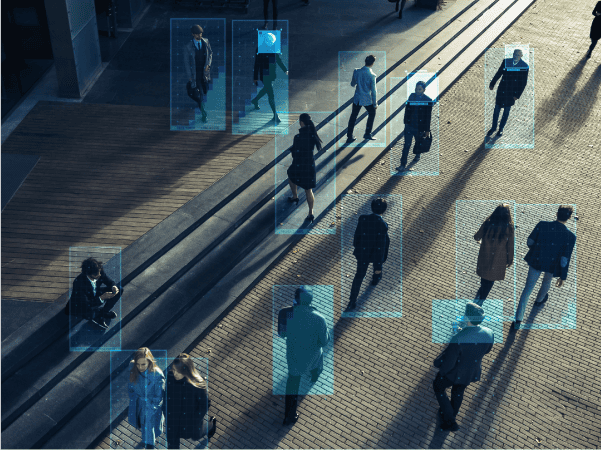
Right now, AI in security and smart technology are already a big part of industry operations. Systems can analyse video in real time, spotting anything unusual and making it easy to search through hours of footage in minutes. AI can recognise objects, vehicles, people and even the colour and style of clothing someone is wearing. Facial recognition is also becoming more common and, when used responsibly, it is a powerful tool, especially in counter-terrorism work.
The biggest change AI brings is how security teams’ work day-to-day. It helps them respond to threats straight away and turn investigations that used to take days into minutes. That means teams can be leaner but still much more effective. AI also handles repetitive tasks far better than humans. It never gets tired, it doesn’t have off days, and it sticks to the rules 24-7-365.
Why Humans Still Matter
Even with all this technology, humans are still at the heart of security. Experience and judgement are things machines just can’t replicate. AI can highlight problems, but only a human can decide whether to escalate, lockdown, or evacuate a site. Security is always about technology, people and process.
A human in the loop is vital. AI might analyse the data, but a person must make the final call. A computer might spot an unattended bag in a public place, but it needs a human intervention to asses if it’s an innocent item being left behind or something more serious.
So yes, AI is a useful tool but is it one to make the final call in a complex security situation.
The Time Computers Almost Started WW3
What we must remember, as much as people are wrong, computers can also be. Take Chat GPT for example as much as people think its gospel it does have a habit of giving out false information, so we must double check its results.
Up until now this has always been the case where humans have had to always had to keep some level of doubt where computers are concerned. I remember hearing a storey from the cold war where a computer glitch nearly started a nuclear war and if it wasn’t for human intervention then Russia and the US might not even be here.
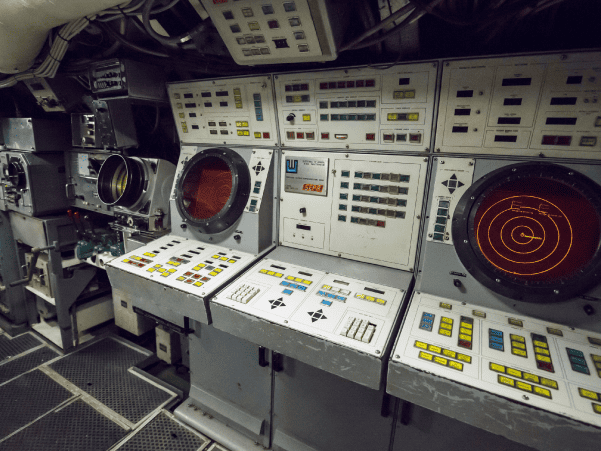
In 1983, the Soviet Union’s early-warning system detected what it thought were incoming American missiles. The system automatically flagged the threat, but the officer in charge, Stanislav Petrov, hesitated. Trusting his experience rather than the alarm, he judged it was a false alert. However, In reality it was a malfunction in the satellite system. Petrov’s calm and critical thinking prevented a catastrophic retaliatory strike. This incident highlights the irreplaceable role of human judgement, even in highly automated, high-stakes situations.
Augmented reality: Humans + AI not Humans Vs AI
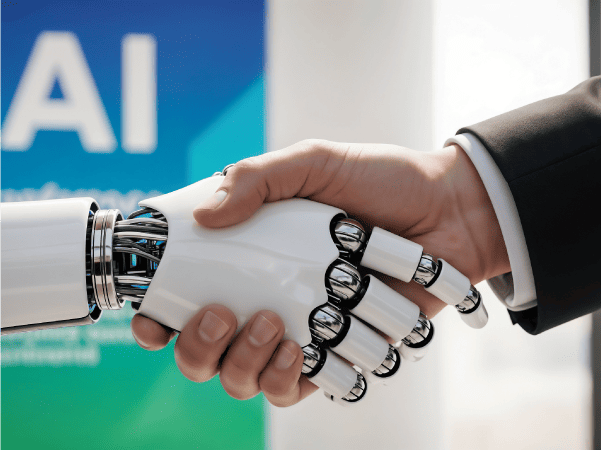
The best results come when humans and AI collaborate. We start by understanding what our clients need and then design AI systems to help manage those risks. Once in place, AI watches for unusual activity and alerts the human operators. The humans then use their experience to decide how to respond.
Now augmented reality traditionally in computer terms is where computer visuals are placed into people’s vision to offer a hybrid combination of virtual reality and real life. But I also like to think we are going into a physical ‘augmented reality’ of where computers and people work together to carry out a task.
In practice, AI makes life much easier for operators, especially when monitoring multiple cameras. But human oversight remains essential. Every decision to escalate or act follows the operator’s training, experience and the site procedures.
AI in Security is Not Big Brother
Some people worry that AI will take jobs away. It is true that fewer operators might be needed in some areas, but it doesn’t mean humans are redundant. The roles just change. Operators become more skilled and valuable, and teams can be redeployed to more critical areas or other roles within the organisation.
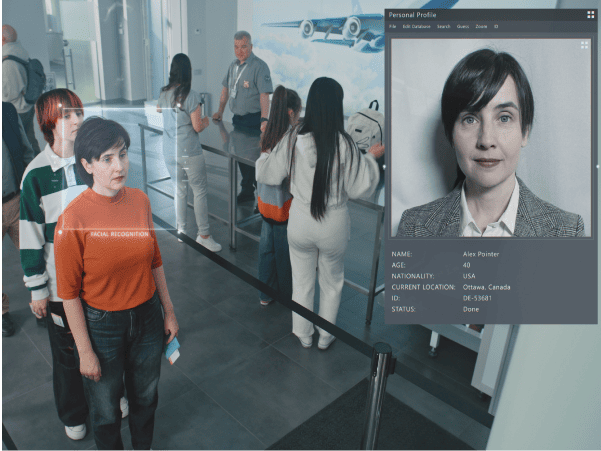
Another common misunderstanding is that AI is invasive or its Big Brother. It isn’t. It is a tool to analyse data quickly, highlight unusual events and help humans respond faster. When used responsibly, AI works with your integration partner to ensure you meet industry standards such as GDPR, to carry out tasks like redacting faces for privacy. Partnering with professional security integrators ensures it is always used ethically.
Smarter Tools, Better Decisions
Security professionals of the future will need to keep up with new technologies and know how to use them in real situations. Managers will have better tools to manage risk, and control room operators will work more efficiently.
Over the next five to ten years, AI will become even smarter, providing advanced alerts and investigative capabilities. But human decision-making will always remain central. Machines might automate some of the follow-up actions, but it will always be humans deciding when and how to act.
On a bigger scale, AI has the potential to solve some of the world’s toughest problems, from curing diseases to tackling complex scientific challenges. It could be the start of a golden age for humanity.
What really excites us in security is the potential for AI in public safety and counter-terrorism. Being able to identify risks before they happen could make our public spaces much safer and give future generations a more secure environment to grow up in.
Humans and AI, Better Together
AI is not here to replace humans in security. It’s not going to be machine guns attached to robotic dogs (as mentioned in AI discussions people have had with me) But It is here to make our work smarter, faster and more effective. Humans bring experience and judgement; AI brings vigilance and speed. Together, they create a security operation that neither could achieve alone.
Should you want learn or talk more about AI in security i will be holding a CPD presentation at the event Birmingham on March 19th you can sign up to sit the CPD here
Enterprise Security Sales Engineer
Protec Fire and Security Group