










Life on the Open Protocol Road
If I’m honest, I’ve lost count of the number of times I’ve heard the phrase, “Protec aren’t open protocol.” It comes up in meetings, appears in specifications, and gets repeated in site conversations, often with a lot of confidence behind it. What’s surprising is how rarely anyone pauses to check what open protocol actually means before drawing that conclusion.
In most cases, this isn’t said with any bad intent. More often than not, it comes from a mix of outdated information, long-held assumptions, and the way addressable fire alarm systems worked many years ago. Unfortunately, once these ideas take hold, they can be difficult to shift, even when the technology and the market have moved on.
Share
My name is Mark Nicholls, and I have been in the fire and security industry for 29 years, and 18 of them have been with Protec. I started off as an apprentice and from then have carried out many roles across the industry such as installation, commission, production, accounts until my current position in sales.
This has given me the opportunity to work closely with a wide range of clients, from small local companies to large UK wide customers. I take pride in providing a service that feels both knowledgeable and personal. I believe sales in the fire and security sector is about far more than simply supplying equipment. It’s about helping people create safer and compliant environments.
Whether I am discussing fire or security products, I always aim to ensure that customers fully understand the benefits, features and long-term value of the systems they are installing. And one of the big talking points I come across is that of Open Protocol and what it means.
Let’s Start from The Beginning
To understand why this keeps happening, you have to go back, not just years but decades. When addressable fire alarm systems first entered the market, they were almost all locked down. Software was restricted, access codes weren’t shared, and manufacturers tightly controlled who could work on their systems. At the time, nobody described these systems as “closed protocol” they were just the norm. Engineers worked within those limitations because there wasn’t an alternative, and consultants didn’t question it because there was nothing to compare it against.
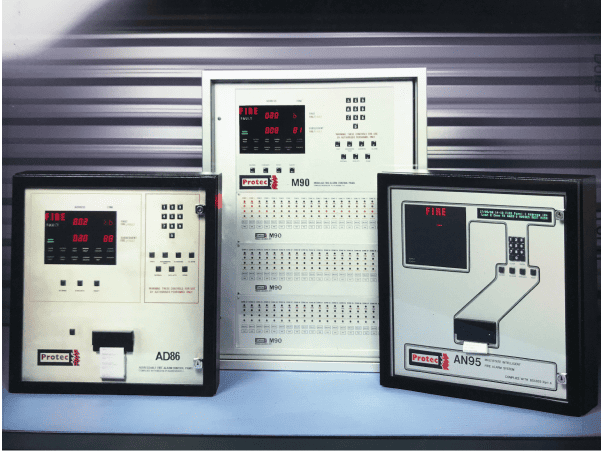
As the industry moved through the 1990s, things started to change. Clients became more aware of lifecycle costs, maintenance contracts became more competitive, and the idea that a building owner should have control over who maintains their system started to gain traction. That’s when the term “open protocol” really entered the conversation. But here’s the issue: while the industry changed, not everyone updated their understanding at the same pace.
Protec And the Term Open Protocol
Fast forward to today, and I regularly hear open protocol being used to mean different things by different people. Some assume it means devices from different manufacturers can be mixed freely on the same loop. Others assume it means “anyone can do anything, with no manufacturer involvement.” Neither of those is correct.
From an engineering point of view, open protocol is much simpler than it’s often made out to be. It means the system isn’t locked to a single installer or service provider. It means any competent fire and security company can access the software, programme the panel, fault-find, and maintain the system without artificial barriers.
What open protocol does not mean, and has never meant, is that you can mix addressable loop devices from different manufacturers and expect them to work together. Addressable systems rely on specific communication methods, and device compatibility has always been manufacturer specific. That applies to Protec, and it applies to every other addressable system on the market. Yet somehow, Protec still gets labelled as “not open” because of a misunderstanding that has nothing to do with openness at all.
From an engineer’s perspective, Protec systems meet the term ‘Open Protocol’. Our current addressable panels, including the 6100 and 6500 series use the 6000PLUS protocol, and are supplied open from the factory. They aren’t locked down, they don’t require paid licences to access, and they don’t force you into subscription models to do basic programming or maintenance.
If you’re a competent fire and security engineer, you can access the system software, connect to the panel, and interrogate it and it really is as simple as that.
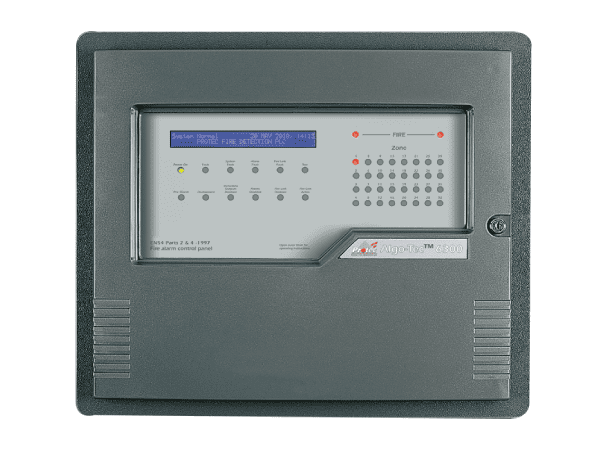
What often surprises people is that this approach isn’t new. Protec were offering open protocol options back in the late 1990s with earlier systems like the 6300 and 6400. Back then, access was enabled via a dongle, which was a progressive move at the time.
No Dongle, No Licence, No Paywall
Today, even that has been removed. With the 6100 and 6500 panels, there’s no dongle, no licence key, no paywall. You log into the Protec support portal, download the software for free, connect your laptop to the panel using a standard printer lead, and you’re in. From an engineering point of view, it’s refreshingly straightforward.
This is where some of the ongoing frustration comes in. I’ve been in meetings where vendor lock-in is rightly criticised and flexibility for the end user is highlighted as a key requirement, only for Protec to be dismissed shortly afterwards as “not open protocol.” The irony is that Protec’s approach is specifically designed to avoid the kind of lock-in those discussions are trying to prevent.
On site, the benefits of this openness are clear. Buildings change ownership, managing agents change, maintenance contracts are re-tendered, and engineers move on. With an open protocol system, those changes don’t become a technical problem. A competent company can take over the system, access it properly, and keep it running. With closed systems, the same changes can lead to delays, increased costs, or difficult conversations just to regain access.
Support Isn’t an Issue
Another concern that often comes up is support. There’s a perception that open protocol means less involvement from the manufacturer. From my experience, that simply isn’t the case. Protec systems are open, but Protec doesn’t disappear once the panel is installed. Manufacturer support is still there when it’s needed, whether that’s technical advice, system knowledge, or help with future changes. That balance of open access with ongoing support is exactly what most clients and engineers want.
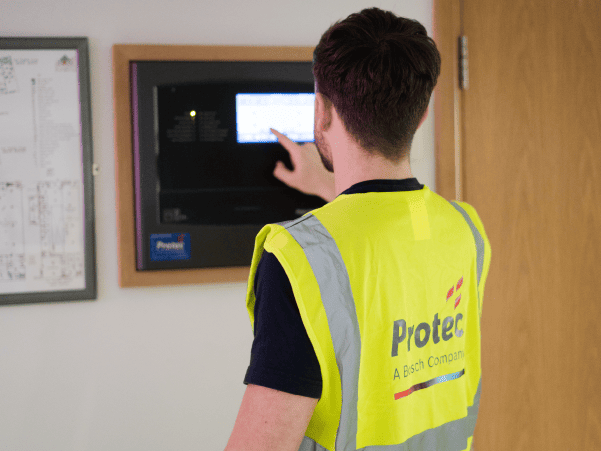
There’s also a practical side to this that often gets overlooked in specifications. Engineers on site don’t want systems that are deliberately awkward to work on. We want systems that are logical, accessible, and well-supported. Protec’s openness makes day-to-day engineering easier, not harder. Fault finding is transparent, programming isn’t hidden behind artificial barriers, and handovers are simpler because the client genuinely owns the system.
There is also another factor worth considering. When fire alarm systems are installed, serviced, and maintained directly by the manufacturer, it can unlock enhanced warranty options. In many cases, a standard 12-month warranty provided with a typical installation can be extended significantly when the system is installed and supported by the manufacturer themselves. With Protec, this forms part of our long-term support approach, giving clients additional reassurance that their system is not only correctly installed, but has an extended warranty throughout its lifecycle.
Is There Still A Need For Closed Protocol Systems?
So, having shared my views on open protocol systems, a fair question often follows: does this mean closed protocol systems are now a thing of the past? The short answer is no.
Closed protocol systems still have a role, but they’ve evolved. What we commonly see today are managed systems, which sit somewhere between traditional closed protocol and fully open protocol. These systems are not freely accessible to everyone, but they’re also not locked to a single manufacturer or installer.
In a managed system, access is controlled using designated access codes that are agreed with and managed by the end user. This means the system remains secure, while the building owner decides who is allowed to programme, service, and maintain it. In practical terms, the client isn’t tied to the system manufacturer or the original installer, but they still retain control over access.
From an end-user perspective, this offers a sensible balance. The system is protected from unauthorised changes, but bespoke access can be provided to a chosen fire alarm contractor or multiple competent companies if required. While the system is technically “closed” in terms of access, it still delivers flexibility where it matters.
Managed systems work particularly well for secure sites or organisations with large property portfolios. For example, a national retail chain with hundreds of stores across the UK and Europe may not want to rely on a single installer in every location. At the same time, they may want consistency and control over who can access their systems. By specifying access codes at the point of manufacture, the client can ensure their chosen service partners can work on the system wherever it’s installed.
Ultimately, both open protocol and managed systems have their place. The key is understanding the difference and choosing the approach that best suits the building and the client’s long-term needs.
Where Does the Industry Need to Go?
So, when I hear Protec described as “not open protocol,” it feels less like a technical assessment and more like an assumption that’s never been revisited. The industry has moved on, but some of the language hasn’t.
Open protocol is used as a marketing buzzword used by manufacturers to push people to their offering of systems. But the industry should move forward and use the term as it’s meant to be used. Which Is to highlight real-world access, long-term flexibility, and practical ownership of a fire alarm system.
From my engineering point of view, Protec have been quietly doing the right thing for a long time. Our systems are open, accessible, and supported. They give consultants what they say they want, and they give end users the flexibility they need.
The challenge now isn’t for Protec changing their approach, it’s for the industry to update its understanding. Sometimes the biggest barrier isn’t the technology on the wall, but the assumptions we’ve been repeating for years without stopping to check whether they’re still true.
Should you want to discuss the Open Protocol discussion more feel free to reach out or even better, catch me at me at The Event Birmingham in March.
Mark Nicholls
Area Sales Engineer Midlands
Protec Fire and Security Group Ltd