










Fire Industry Association ASD Code of Practice 2026: What’s Changed and What It Means for the Fire Industry
The fire industry has changed significantly since the last FIA ASD Code of Practice was published in 2012. Warehouses have become taller, data centres more complex, and expectations around performance, accessibility, and system verification have carried on evolving. With the release of the newly revised Design, Installation, Commissioning & Maintenance of Aspirating Smoke Detector (ASD) Systems Code of Practice, the industry now has an updated framework that reflects up-to-date challenges, emerging technologies and over a decade of practical experience.
From warehouse protection and high-airflow environments to lift shafts, data centres, and commissioning methodologies, the refreshed guidance represents one of the most significant developments in ASD design in years. So, what has changed, why does it matter, and what impact could these amendments have on the future of fire detection?
We spoke to our Product Strategy Manager, who discusses the new changes to the Code of Practice, what his involvement entailed, and what it means for the fire industry in general.
Share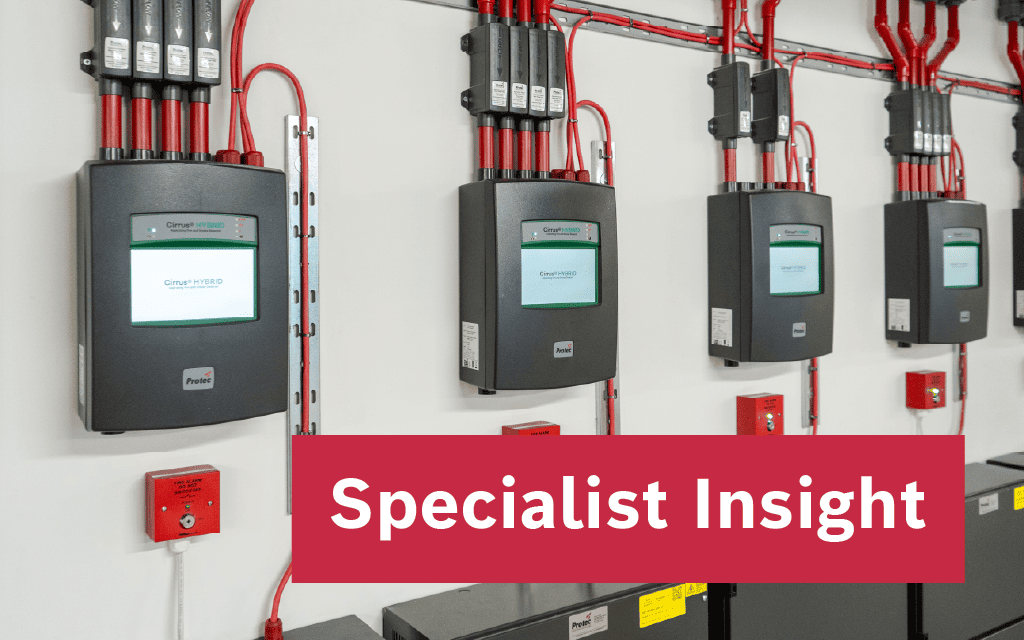
I’m Chris Barratt, the Product Strategy Manager at Protec. Over the years, I’ve had the honour of working closely with aspirating smoke detection technology and seeing firsthand how it continues to develop to meet increasingly complex fire safety challenges. In my role at Protec, I’ve worked alongside the FIA and industry experts to help develop Aspirating Smoke Detection (ASD) solutions for projects ranging from data centres and warehouses to critical infrastructure and other high-risk environments.
That’s why I’m delighted to see the FIA’s newly revised Design, Installation, Commissioning & Maintenance of Aspirating Smoke Detector (ASD) Systems Code of Practice (Version 2). As the first full revision since 2012, it represents one of the most considerable updates to ASD guidance in more than a decade.
Developed through extensive collaboration within the FIA ASD Task Group, the new Code introduces updated guidance for warehouse protection, high-airflow environments, lift shaft detection, and performance testing. Most importantly, it reflects the latest research, industry experience, and hands-on application knowledge, giving designers, installers, and end users guidance relevant to today’s fire detection obstacles.
In this specialist insight, I’ll explore key changes and what they mean for those involved in designing, installing, and maintaining ASD systems.
New recommendations for warehouse ASD protection
One of the biggest areas we focused on during this revision was warehouse protection. Warehouses have changed significantly over the last decade, with taller buildings, higher-density storage and more complex racking layouts. We wanted to move away from a one-size-fits-all approach and provide guidance that shows real-world risks. The result is a more practical, risk-based framework that helps designers choose the right level of protection for the building, the contents and the likely consequences of a fire.
Introduction of a warehouse design and risk assessment spreadsheet/template
As a group, we needed a more consistent way to approach warehouse design. That’s why we introduced the new warehouse design template. It encourages designers to consider key factors such as fire load, ceiling height, business importance and response capability before deciding on a detection strategy. It’s not there to replace engineering judgement, but to support it and provide a clear rationale behind design decisions.

Expanded guidance covering multi-level and in-rack ASD detection
We’ve also expanded the guidance on in-rack and multi-level detection, as we see this used more frequently in large storage facilities. Through research, industry feedback and practical experience, we’ve been able to provide clearer recommendations on hole spacing, detector levels and pipe positioning. The aim is simple: to enable earlier detection where waiting for smoke to reach the ceiling could cause avoidable delays.
Updated recommendations for lift shaft protection
Lift shafts have always been a difficult environment to protect and maintain. During the review process, we looked closely at European guidance and modern best practice, particularly around accessibility and safe maintenance. The updated recommendations recognise the benefits of ASD for lift shaft protection and place greater emphasis on multi-level sampling, boosting detection performance while making ongoing testing and maintenance safer and more practical.
In accordance with BS 5839-1:2025
A key objective throughout the project was making sure the Code reflected the latest edition of BS 5839-1. We assessed the document against the 2025 revision and updated references, recommendations and terminology where required. This alignment approach should make it easier for designers and installers to apply ASD systems in modern fire alarm designs while ensuring compliance with the latest UK fire detection guidance.
Incorporation of FIA guidance on high airflow environments
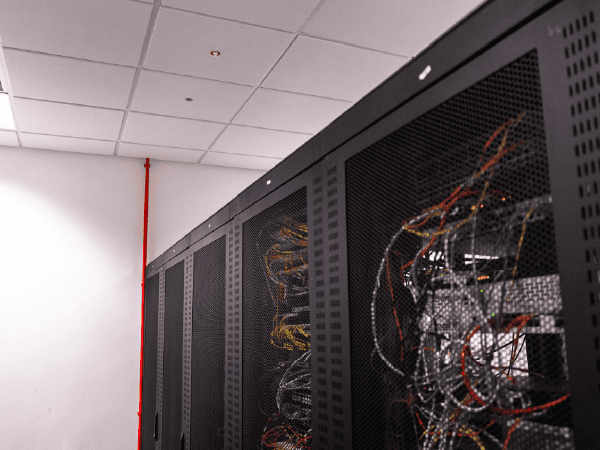
High airflow environments are still one of the most common and technically challenging ASD applications. We incorporated lessons learned from the FIA’s dedicated guidance on this topic to provide more practical recommendations for data centres, server rooms and similar environments. The additional guidance helps designers better understand airflow effects and choose the most effective combination of primary and secondary detection plans.
Enhanced guidance covering specialist applications
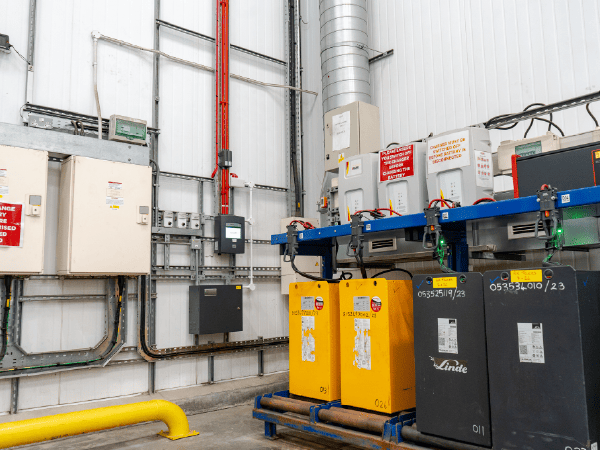
Over the years, we’ve seen ASD systems being used in a much wider range of applications than when the previous Code was published. As a result, we expanded several sections to include more practical advice for data centres, cabinets, ducts, warehouses, hazardous areas, and inaccessible spaces. We intended to share knowledge gained from real installations and give engineers greater confidence when designing systems for tougher environments.
Updated performance testing methodologies and commissioning guidance
We also spent considerable time reviewing the testing and commissioning sections. Performance testing is one of the most important ways to demonstrate that a system will perform as intended, so the guidance required to reflect current practices. The revised recommendations provide clearer direction on transport time testing, performance verification and ongoing maintenance checks, helping engineers prove system performance both at commissioning and throughout the life of the installation.
The Enamel Wire Test and Cloud Chamber Technology
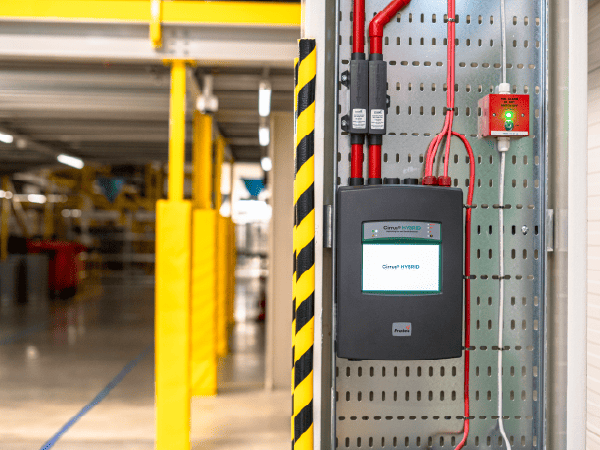
Another notable inclusion within the revised Code of Practice is the Enamel Wire Test, which is specifically referenced as a suitable performance test for ASD systems that utilise cloud chamber technology. The test simulates the earliest stages of an electrical fault, producing microscopic combustion particles before visible smoke appears.
It’s great to see cloud chamber technology recognised in the guidance, as its ability to detect these ultra-fine particles makes it one of the most effective methods for very early fire detection. At Protec, this technology forms the foundation of both our Cirrus HYBRID and Cirrus CCD aspirating smoke detection systems, helping to provide the earliest possible warning in critical environments such as data centres, telecommunications facilities and other high-value assets.
The inclusion of the Enamel Wire Test reinforces the importance of cloud chamber technology and highlights its continued role in advancing ASD performance and reliability.
Closing Thoughts
Developing this revised Code of Practice has been an exceptionally rewarding experience. What started as a much-needed update to a document first published in 2012 evolved into a genuinely collaborative effort between manufacturers, consultants, installers and industry experts, all working towards a common goal of improving how ASD systems are designed, installed, commissioned and maintained. Being involved in that process on behalf of Protec, and seeing years of discussion, research, and practical experience finally come together in a published document, is something I’m particularly proud of.
While this Code sits alongside British Standards and has been developed through the FIA, its authority extends far beyond the UK. Over the years, the FIA ASD Code of Practice has become a recognised point of reference for projects across Europe, the Middle East and beyond, with its guidance frequently adopted or referenced in countries including the UAE and alongside practices used in parts of mainland Europe and the United States. Its practical, application-focused approach has helped make it a crucial resource for anyone involved in ASD system design.
Most importantly, this revision demonstrates where the industry is today and where it is heading tomorrow. Whether it’s warehouse protection, data centres, lift shafts or high-airflow environments, the new guidance provides a stronger foundation for delivering effective ASD solutions. I’m excited to see how the industry adopts these recommendations and how they help drive even higher standards of fire detection in the years ahead.
Chris Barratt
Product Strategy Manager
Protec Fire and Secuirty Group
Should you like more information about any of our ASD techonogies or have a project you think you would be suited to our aspriating detectors contact our sales team who will be able to assist you