








Specialist Insight: Why Integration Is Not Optional Anymore
If you spend enough time delivering systems on large construction projects—particularly in custodial, infrastructure, and other high‑security environments you start to see a pattern. The projects that hand over well and continue to perform over time usually share one thing: their life safety and security systems are properly integrated. The ones that struggle tend to look the same too – fragmented systems, blurred responsibilities, and minimal ownership of the end‑user experience.
Share
I’m Chloe, and I’ve worked in Protec’s Custodial division for almost 10 years. Across major Ministry of Justice (MoJ) schemes, I’ve seen what happens when systems don’t align: delivery becomes harder, risk increases, and operations suffer. That’s why I don’t see integration as a “nice to have” anymore. On custodial projects, it’s essential.
At Protec, integration doesn’t happen by accident. It’s the result of dedicated design, experienced project delivery, specialist commissioning, and in‑house R&D working as one team from day one, well before boots hit the ground. When those parts align early, systems are easier to deliver, safer to operate, and far more effective for the people relying on them every day.
It Usually Starts with One Simple Question: “Who Owns It?”
On large MoJ schemes, one of the most important conversations is rarely about devices or specifications. It’s about responsibility:
- Who owns the cause & effect strategy?
- Who ensures the fire alarm correctly interfaces with suppression?
- Who guarantees a security event triggers the right response across site systems?
- When something doesn’t work, who is accountable?
Where multiple contractors deliver separate systems, those answers can quickly become unclear – exactly where risk starts to creep in.
Protec’s integrated, turnkey approach removes that uncertainty: one supplier, one coordinated design strategy, one commissioning plan, and clear accountability for system performance and end-user outcomes.
Cause & Effect: Where Integration Proves Its Value
On custodial projects, cause & effect is rarely straightforward. It demands detailed schematics, careful coordination, and genuine multi‑discipline understanding—often across different manufacturers and platforms while maintaining compliance and operational integrity.
In real terms, cause & effect can include interactions such as:
- Fire alarm activation driving smoke control (e.g., dampers),
- door release and operational sequencing,
- suppression initiation,
- phased evacuation logic,
- simultaneous signals to security management platforms and control rooms.
These relationships must be clearly documented, fully coordinated with stakeholders (including operators and end users), and thoroughly tested. This is where a dedicated custodial design team makes a measurable difference: designing the system to operate correctly as a whole, not as isolated parts.
Integration Reduces Risk—Not Just Complexity
Integration is often described as a technical benefit, and it is, but its greatest value on MoJ projects is risk reduction.
Custodial environments are full of dependencies: fire detection links into cause & effect strategies; security relies on accurate inputs and immediate response; cell call and suppression may need to operate in real time without delay or ambiguity.
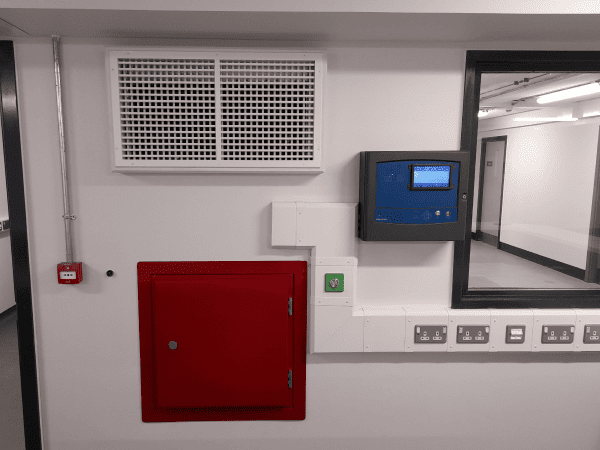
When systems are delivered independently, every interface becomes a potential risk point. An integrated approach reduces that exposure because interfaces are designed, installed, configured, and commissioned as part of a single coordinated solution making verification structured and accountability clear.
Just as importantly, integrated delivery works best when design, project management, software configuration, and commissioning are aligned as one process, rather than separate stages.
The Reality on Site
Ask any engineer on a major build and they’ll tell you: site conditions are where integration either holds together or unravels.
On paper, multiple contractors working in parallel can sound efficient. On site, it often leads to:
- programme clashes and sequencing issues,
- late interface connections,
- commissioning becoming reactive rather than planned validation.
With Protec’s integrated delivery model, many of these issues reduce significantly because coordination happens within one accountable team. Shared infrastructure is planned, installation is structured, and commissioning follows a defined strategy rather than a last‑minute interface chase.
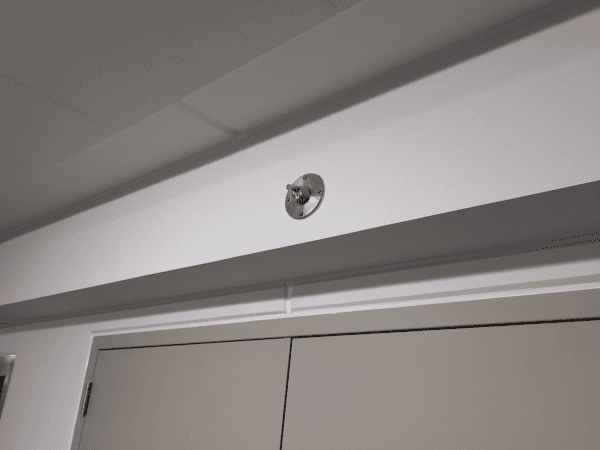
Even at product level, integration reduces risk by reducing complexity fewer components, fewer interfaces, and less wiring means fewer opportunities for faults. Scaled across a whole custodial site, that benefit becomes significant.
Bespoke Integration Where Standard Products Aren’t Enough
A key strength of Protec’s Custodial division is the ability to deliver bespoke solutions, where standard products alone don’t meet operational need.
Complex custodial sites often require integration across fire detection, security, communications, CCTV, and suppression—bringing events into a single, coherent operational picture. That can include software integration with third‑party systems, developed collaboratively with specialist integration partners and supported by our in‑house UK R&D team.
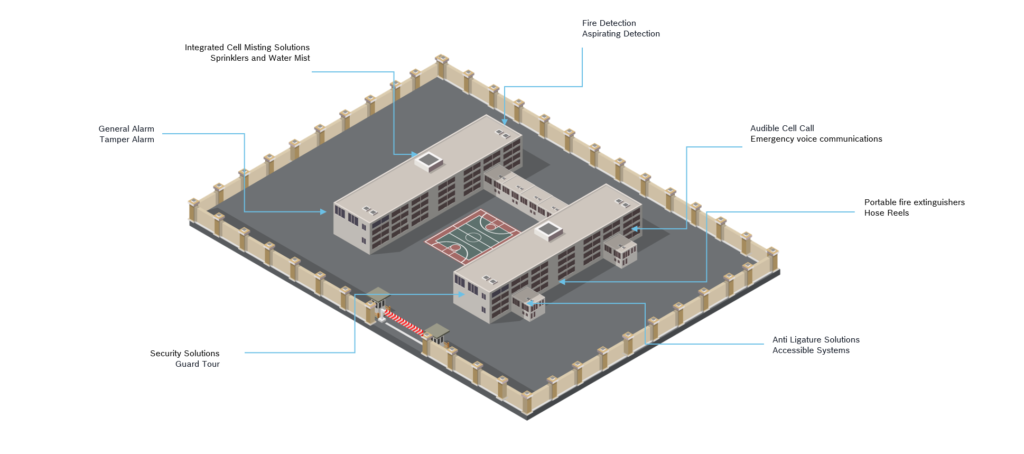
In my experience, the best solutions aren’t always the most complicated. They’re the ones built from real custodial experience, refined over time into solid, repeatable systems that engineers can deliver and operators can trust.
Where Programmes Slip: Commissioning
Commissioning is where design intent meets operational reality. On non‑integrated projects, commissioning can become fragmented, systems tested in isolation, with integration left until the final stages. Often, that’s too late to resolve issues without delays or compromises.
With an integrated approach, commissioning is carried out as the system was designed, as one solution. Cause & effect is proven across disciplines, interfaces are tested under real conditions, and control rooms are validated as operational tools – not a collection of separate screens.
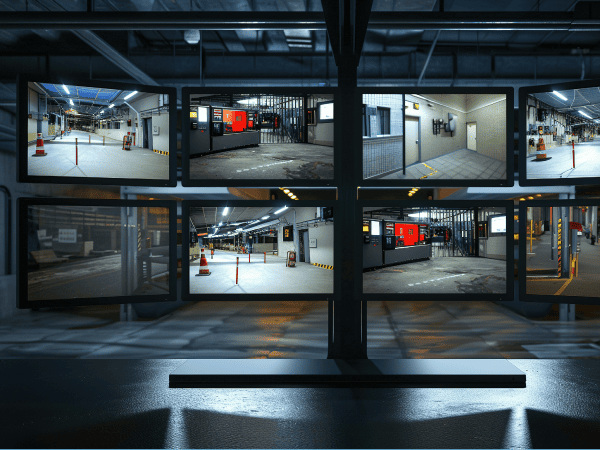
This is also where experienced teams matter. Designers, commissioning engineers, and project managers who know custodial standards and MoJ expectations bring consistency and pace—reducing risk through to handover.
Designed for the People Who Use It
Integration isn’t only about engineering. It’s about operational performance.
In high‑security environments, operators don’t have time to interpret information across multiple unconnected systems during an incident. They need clear information and a coordinated response immediately.
By integrating fire detection, cell call, general alarm, suppression, CCTV, and communications into a cohesive platform, Protec helps deliver:
- events that are automatically linked,
- responses that trigger instantly,
- clearer decision‑making and faster action.
Put simply: the system works with the operator, not against them.
Maintenance and the Long-Term View
Handover isn’t the end of a custodial project—it’s where the real test begins.
Over time, systems require servicing, adjustment, and upgrades. In fragmented setups, this becomes more complex: different suppliers, different technologies, and inconsistent service approaches.
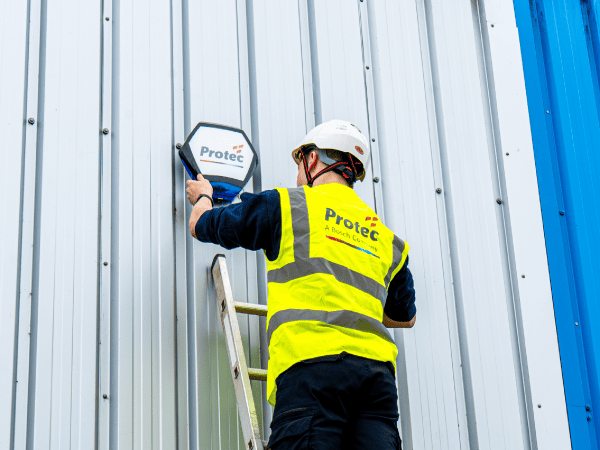
A fully integrated system supported by a single provider simplifies long‑term performance:
- faster fault‑finding,
- consistent engineering approach,
- aligned spares, updates, and upgrades,
- a clearer pathway to connected monitoring and unified management.
Our UK‑based development capability also means solutions can evolve based on real custodial experience, supporting long‑term reliability without losing sight of compliance and operational integrity.
Why This Matters on MoJ Projects
In most buildings, system performance is important. In custodial environments, it’s critical.
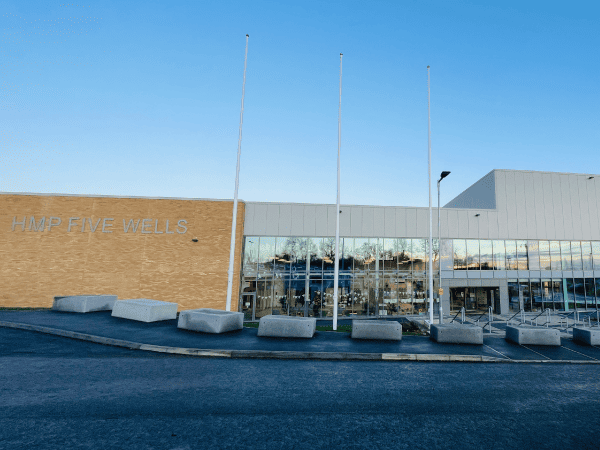
Safety, security, and operational control are interdependent and there is no margin for interfaces that fail under pressure. That’s why integrated, turnkey delivery has become such a strong model in the MoJ sector: it reduces risk, simplifies delivery, and helps ensure the site performs as intended from day one.
A Final Thought
There was a time when integration could be considered a differentiator. On large, complex custodial schemes today, it’s closer to a baseline requirement, though not all integration is equal.
True integration isn’t just connecting systems together. It’s designing them to work together from day one, delivering them through a single accountable team, and supporting them across the lifecycle.
Because in the end, life safety and security systems aren’t judged by how tidy they look on a drawing. They’re judged by how they perform when it matters most.
Chloe Aspden
Special Projects Design & Estimating Manager
Protec Fire and Security Group